£0.78
£456.78
£123,456.78

This store requires javascript to be enabled for some features to work correctly.

Next batch 7 November

Care for your sight

Clean, research-backed nutrients that protect and support your vision at the molecular level, from the lens to the vitreous to the macula.

  • Backed by peer-reviewed studies
  • Pure, with no chemical fillers
  • Recommended by nutritionists
  • Trusted by 10,000+ since 2023
Hands tipping Clearer® capsules from the bottle into a palm, beside a glass of water
ScienceAlertYahoo NewsWellbeing MagazineThe Mail on SundayThe IndependentThe i newspaperMy Weekly

Customer-reported experiences. Clearer® is a food supplement for nutritional support of eye health.

Nathan

Customer review

Original message: I’ve been using Clearer for 3–4 months now and noticed a difference in overall eye health. Floaters aren’t as noticeable as they used to be.

Spencer

Verified review

Original message: I’ve had bad eye floaters for the last 20 years… I’ve used Clearer for 8–9 months now and they have become much lighter and now less distracting.

Andrea

Customer email

Original message: I have been taking Clearer for approximately a year now and although my eye floaters are not gone they have diminished incredibly over this time.

Katie

Customer review

Original message: My eyes definitely feel less tired and strained. My floaters are not as obvious to me too.

Phillip

Social comment

Original message: The best I can say it worked for me, but it was 6 months everyday. Have a look at the data. It’s why I decided to try it.

Ell

Customer review

Original message: The fact they’re free of additives etc is a big positive given they’re now a part of my daily routine.

Clearer® is sold out until 7 November

Pre-orders ship first from the new batch, so order today to reserve yours.

Already a subscriber? Your stock is reserved, so your deliveries continue as planned.

Research-backedNo chemical fillers

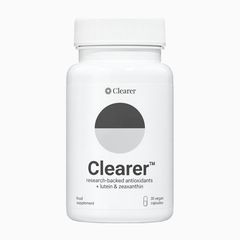
Clearer® Eye Health Supplement

Read customer reviews

A daily capsule for long-term support, not just for your macula but for your whole eye, especially its clear gel, the vitreous.

Shona Wilkinson
“An innovative supplement to address the growing concern of eye health, including both vitreous and macular health, and protecting the eyes from oxidative damage, blue light, and UV.”
Shona WilkinsonRegistered Nutritionist, former Head Nutritionist at Tesco’s NutriCentre

Pre-order today

Ships from 7 Nov
180-day guaranteeMoney back
Made in the UKGMP-certified
Third-party testedby Eurofins
Pre-orderPriority access to the next batch
  1. TodayReserve your bottles
  2. 7 NovNext batch arrives
  3. Ships firstIn the order received

Pre-orders are reserved from the new batch and dispatched before it goes on general sale. Payment is taken today. Changed your mind before dispatch? Email info@clearereyes.com for a full refund.

Theresa
★★★★★

“I asked my Optometrist her opinion of Clearer. She immediately looked up the product. The ingredients are correct and there are no fillers. Now more than 6 months later after an eye scan, she was able to compare my eyes to previous visit and said there was definite improvement.”

Rachel
★★★★★

“I have been taking Clearer for a few months now and I have noticed a huge difference in my vision and eye floaters.”

David
★★★★★

“I have been on it 2 months, went for annual eye test yesterday and was told good enough to be a pilot! Not bad at 77 years old.”

Andrew
★★★★★

“I was very skeptical about trying these - I have floaters and squiggly filaments which have been getting worse over the past couple of years. I have been using the capsules for nearly two months and I can definitely notice a difference.”

Sam
★★★★★

“I have been on it for four months and have already noticed fading of my floaters. I will stay on it as long as you keep making it.”

Customer-reported experiences.

What’s inside

Grape seed extract (52.6 mg, 120:1), bitter orange (200 mg), L-lysine (250 mg), vitamin C (80 mg), zinc citrate (10 mg) and marigold flower powder giving about 10 mg lutein and 0.83 mg zeaxanthin per capsule.

Other ingredients: slow-release HPMC capsule shell and organic brown rice flour.

How to use

One capsule a day, with or after a meal.

The floater study behind Clearer® ran for six months of daily use, which is why we suggest a six-month routine. Oxidative stress and glycation add up over the years, so daily support matters for the long term.

The research

Clearer® is formulated with reference to a six-month, randomised, double-blind, placebo-controlled trial published in 2021. It has the five studied nutrients at twice the amounts listed in the study, plus lutein and zeaxanthin, with 100% of the daily reference for vitamin C and zinc, and zinc as citrate, a well-absorbed form.

Pre-order and shipping

Clearer® is on pre-order. The next batch arrives by 7 November, and pre-orders are dispatched first, in the order they were placed. Payment is taken when you order. If you change your mind before dispatch, email info@clearereyes.com for a full refund.

Free UK shipping. Tracked international shipping to 40+ countries. If your order includes other products, everything ships together with your pre-order.

Already a subscriber? We reserved stock for subscribers, so your deliveries continue on time.

Sudden new floaters, flashes of light or a shadow across your vision need urgent eye care. Food supplements are not a substitute for a varied diet.

The research

Eye floater support

Clearer® is formulated with reference to a six-month, double-blind, placebo-controlled trial. The measured area of vitreous opacities, the clumps behind floaters, decreased on imaging in 77% of people on the formula, compared with 29% on placebo.

Clearer® has the same five nutrients at twice the amounts listed in the study: L-lysine, vitamin C, grape seed extract, zinc and bitter orange. Six months of daily use is what the study measured.

Illustration: the back of the eye, reconstructed from a real retinal photograph, with the macula at the centre and the optic disc on the right.
The research

Macular health

Your macula is the small centre of the retina behind your sharpest vision. Lutein and zeaxanthin concentrate there as its yellow pigment, absorb blue light and act as antioxidants.

In a one-year trial, 10 mg of lutein a day with zeaxanthin raised macular pigment compared with placebo. Each Clearer® capsule gives you about 10 mg of lutein.

The mechanism

Collagen integrity

A fine network of collagen keeps your vitreous clear, and your eye makes little, if any, new collagen after infancy. Oxidative stress and glycation, where sugars bond to proteins, are linked with collagen ageing, and clumped fibres cast the shadows you see.

Clearer® combines grape seed, citrus flavonoids and lysine, studied in the lab against glycation, with vitamin C, which your skin’s collagen-making cells depend on.

The research

Antioxidant protection

Oxidative stress is damage from reactive oxygen molecules. Your eye is especially exposed: it takes in light constantly and uses a lot of oxygen, and its natural defences decline with age.

In a lab comparison, grape seed extract neutralised 78–81% of two free radicals, vitamin C 12–19%. Vitamin C and zinc help protect your cells from oxidative stress, and zinc helps maintain normal vision.

Whole-eye support in one daily capsule

Eye floater support

The five nutrients that eased floater discomfort in a trial, each doubled.

Collagen integrity

Sugars stiffen collagen that keeps eyes clear. Lysine curbed it in tests.

Illustration: the back of the eye, reconstructed from a real retinal photograph, with the macula at the centre and the optic disc on the right.

Macular health

10 mg lutein, as in major eye trials, for the macula behind sharp vision.

Antioxidants

Your eye's gel hoards vitamin C, its key antioxidant. You get 80 mg.

Why Clearer® is unlike other eye supplements

Few eye supplements give you all of this in one capsule: nutrients from a floater trial, support for your macula, a clean formula and forms your body absorbs well.

A bottle of Clearer® beside a small glass dish of four capsulesA woman holding a Clearer® capsule, smilingA marigold flower, the source of lutein and zeaxanthinA sample of powder on a clear glass plate

Based on peer-reviewed research: expert nutritionists formulated Clearer® with reference to a six-month, placebo-controlled floater trial.

  • Floater nutrients: the five studied in that trial
  • The formula: each at twice the amount listed in the study, plus lutein and zeaxanthin
  • Increased dosages for whole-body benefits: 100% of the daily reference for vitamin C and zinc
Research sources
  1. Wegmüller R, et al. J Nutr 2014;144:132–136. https://pubmed.ncbi.nlm.nih.gov/24259556/
  2. Bharadwaj VG, et al. Cureus 2025;17(2):e79481. https://pubmed.ncbi.nlm.nih.gov/40135032/
  3. Bowen PE, et al. J Nutr 2002;132(12):3668–3673. https://pubmed.ncbi.nlm.nih.gov/12468605/
  4. Ankamah E, et al. Transl Vis Sci Technol 2021;10(12):19. https://pmc.ncbi.nlm.nih.gov/articles/PMC8525826/

Dark dots and squiggly lines that spoil a beautiful blue sky

They drift across the page and dart away when you look. For a long time, they were written off as a normal part of ageing, something to live with.

Behind them is vitreous degeneration: the gel inside your eye breaks down with age, whether you notice floaters or not.

This page is about age-related floaters. Sudden floaters, flashes or a curtain across your vision can signal an urgent eye problem: get same-day assessment.


A bright blue sky with soft clouds, and the dark threads and dots of floaters drifting across it

Eye floaters are not just normal. They are collagen damage.

The collagen in your eye’s clear gel is prone to damage over time. Damaged fibres clump together, and you see their shadows as floaters.

Cross-section of an eye: a beam of light passes through the cornea and lens, meets a collagen clump in the clear gel and casts a shadow on the retina

Light enters the eye

Light passes through the cornea and lens, then through the clear gel towards your retina.

A collagen clump crosses the path

Inside the gel, strands of collagen clump together and sit in the path of the light.

A shadow is cast on the retina

The clump casts a soft, moving shadow on your retina. That shadow is the floater you see.

Clear vision relies on collagen that has to last a lifetime

A fine network of collagen keeps your vitreous clear, and your eye makes little, if any, new collagen after infancy. So damage adds up over the years.

A transparent gelCollagen breakdownTargeted support

A transparent gel

Collagen and hyaluronan hold the water in place, so light passes through uninterrupted.

About 99%
Water, held as a clear gel
About 1%
Collagen, water-holding hyaluronan and more

Collagen breakdown

With age, the collagen breaks down. Fibres clump, and water separates out of the gel into pockets of liquid called lacunae.

Oxidative stress
Light and oxygen create free radicals that can break down hyaluronan and damage collagen.
Glycation
Sugars slowly bond to collagen in everyone, cross-linking its fibres.

Targeted support

Clearer® gives you daily antioxidants and anti-glycation nutrients, aimed at two of the processes that damage vitreous collagen.

Antioxidants
Vitamin C, zinc and grape seed
Anti-glycation nutrients
L-lysine, bitter orange and grape seed

Vitreous liquefaction

The breakdown accelerates after 40. As the collagen fibres clump together, they leave spaces where the gel turns liquid. Everybody’s vitreous degenerates with age, whether or not they notice floaters yet.

1 in 4
people in their 40s had over half their vitreous liquefied, in one autopsy study
About 6 in 10
people in their 80s had over half their vitreous liquefied, in the same study
Age 40GelLiquid lacunae100%50%0%0102030405060708090Age 40GelLiquid lacunae100%50%0%020406080
Share of the vitreous that is liquid, by age. Average across 610 donor eyes, different people at each age. Balazs & Denlinger data, in Sebag, Eye 1987.
Research sources
  1. Sebag J. Ageing of the vitreous. Eye 1987;1:254–262. https://pubmed.ncbi.nlm.nih.gov/3308528/ (Balazs & Denlinger data; O’Malley, 800 autopsy eyes, 1976)
  2. Le Goff MM, Bishop PN. Adult vitreous structure and postnatal changes. Eye 2008;22:1214–1222. https://pubmed.ncbi.nlm.nih.gov/18309340/
  3. Sebag J. Vitreous and vision degrading myodesopsia. Prog Retin Eye Res 2020;79:100847. https://pubmed.ncbi.nlm.nih.gov/32151758/
  4. Bishop PN, et al. Age-related changes on the surface of vitreous collagen fibrils. IOVS 2004;45:1041–1046. https://pubmed.ncbi.nlm.nih.gov/15037566/
  5. Foos RY, Wheeler NC. Vitreoretinal juncture. Ophthalmology 1982;89:1502–1512. https://pubmed.ncbi.nlm.nih.gov/7162795/
  6. Stitt AW, et al. IOVS 1998;39:2517–2523. https://pubmed.ncbi.nlm.nih.gov/9856760/
  7. Berra A, et al. Age-related antioxidant capacity of the vitreous. Arch Gerontol Geriatr 2002;34:371–377. https://pubmed.ncbi.nlm.nih.gov/14764337/
  8. Ankamah E, Sebag J, Ng E, Nolan JM. Vitreous antioxidants, degeneration, and vitreo-retinopathy. Antioxidants 2019;9(1):7. https://pubmed.ncbi.nlm.nih.gov/31861871/
  9. Tram NK, Swindle-Reilly KE. Front Bioeng Biotechnol 2018;6:199. doi:10.3389/fbioe.2018.00199
  10. Milston R, Madigan MC, Sebag J. Surv Ophthalmol 2016;61:211–227. https://pubmed.ncbi.nlm.nih.gov/26679984/
  11. Lumi X, et al. Ageing Res Rev 2015;21:71–77. https://pubmed.ncbi.nlm.nih.gov/25841656/

In a six-month trial, nutrients eased the discomfort of floaters

You may have been told to live with floaters. Researchers tested five targeted nutrients against placebo, then measured opacities, the clumps behind floaters, on imaging.

Illustration redrawn from published imaging: the vitreous opacities of one participant on the study formula, before and after six months, with a smaller measured area after.
BeforeAfter 6 months
One participantIllustration based on published scans (Ankamah 2021)

Researchers gave a blend of nutrients to people with eye floaters

Six months, double-blind, placebo-controlled, with imaging before and after.

Read the published study

77% 20 of 26

of people on the formula showed a decrease in measured opacity area on imaging, compared with 29% (6 of 21) on placebo.

On the formula
On placebo

37% 11 of 30

of people on the formula said their floaters no longer bothered them by six months, compared with 15% (4 of 26) on placebo. At the start, one person in each group said so.

On the formula
On placebo

Educational information. Clearer HealthTech is not affiliated with the research institution, and Clearer® itself was not the product tested. It was formulated with reference to the research by expert nutritionists, and contains not only those five nutrients at double the listed amounts, with zinc as citrate, but also macular support for the whole eye.

Does it mean that floaters were eliminated?
No, and no honest supplement can promise that. What changed was the measured area of the clumps on imaging and how much they bothered people, and more people improved on both measures on the formula than on placebo.
Do floaters disappear by themselves anyway?
Many people notice them less over time. That fading is neuroadaptation: your brain learns to ignore the shadow while the clump stays. A camera does not adapt, so the imaging result above is not just your brain tuning out. Discomfort, out of 6, fell from 3.90 to 2.10 on the formula and barely changed on placebo (3.69 to 3.35).
How do nutrients reach the vitreous?
Through your blood. Your eye actively pumps vitamin C into its gel, where levels are about 12 times those in your blood. In guinea pigs, which like us must get vitamin C from food, levels in the eye rose with intake and then levelled off. In people, oral vitamin C raises levels at the front of the eye; levels in the vitreous have not yet been measured after a dose. As for grape seed, related plant compounds taken by mouth have been measured in eye tissue in animals, and one reached the human vitreous in a small surgical study.
Why these nutrients?
Researchers chose them to counter oxidation and sugar damage, two processes linked with an ageing vitreous.
  • Vitamin C: your eye concentrates it in the gel, where it works as an antioxidant.
  • Grape seed: its polyphenols are strong antioxidants and help block sugar damage in lab tests, and it has been studied for the retina too.
  • Bitter orange: carries citrus flavonoids, such as hesperidin, studied in the lab for limiting sugar damage to long-lived proteins, including in your lens.
  • L-lysine: naturally present in your vitreous, and the best of three agents at blocking sugar damage to vitreous collagen in a lab study.
  • Zinc: your eye is one of the body’s richest stores of zinc, and zinc helps your cells defend against oxidative stress.

Clearer® adds lutein and zeaxanthin, which form the yellow pigment of your macula, the part of your retina behind your sharpest central vision.

If the vitreous is so important, why didn’t my optician tell me?
Floaters are so common they have long been seen as a normal part of ageing. Your optician’s first job is to check your retina is safe, and the usual advice is reassurance. The research is also young: the placebo-controlled nutrient trial on floaters was only published in 2021, and vitreous research is small beside the retina’s. And medicine grew up treating disease. Studying ageing itself, and acting before problems start, is a newer idea from longevity science. That is the thinking behind looking after your eyes early.
Aren’t eye floaters normal?
Age-related floaters are normal in the sense that wrinkles are normal: very common, and a sign of ageing. Like wrinkles, they tell you something is changing underneath, and that is worth looking after.
Research sources
  1. Ankamah E, et al. Dietary intervention with a targeted micronutrient formulation reduces the visual discomfort associated with vitreous degeneration. Transl Vis Sci Technol 2021;10(12):19. https://pmc.ncbi.nlm.nih.gov/articles/PMC8525826/ (six months, double-blind, placebo-controlled; 61 enrolled, 56 completed, 47 imaged)
  2. Sebag J. Vitreous and vision degrading myodesopsia. Prog Retin Eye Res 2020;79:100847. https://pubmed.ncbi.nlm.nih.gov/32151758/
  3. Milston R, Madigan MC, Sebag J. Vitreous floaters: etiology, diagnostics, and management. Surv Ophthalmol 2016;61:211–227. https://pubmed.ncbi.nlm.nih.gov/26679984/
  4. National Eye Institute. Floaters. https://www.nei.nih.gov/eye-health-information/eye-conditions-and-diseases/floaters
  5. RNIB with the Royal College of Ophthalmologists. Understanding posterior vitreous detachment. https://www.rnib.org.uk/documents/1899/Understanding_PVD_2023.pdf
  6. Berger J, et al. Curr Eye Res 1988;7(7):681–686. https://pubmed.ncbi.nlm.nih.gov/3416622/
  7. DiMattio J. Invest Ophthalmol Vis Sci 1989;30(11):2320–2331. https://pubmed.ncbi.nlm.nih.gov/2807790/
  8. Park SW, et al. PLoS One 2019;14(6):e0218433. https://pubmed.ncbi.nlm.nih.gov/31216331/
  9. Hah YS, et al. BMC Ophthalmol 2017;17:121. https://pubmed.ncbi.nlm.nih.gov/28693452/
  10. Chu KO, et al. J Agric Food Chem 2010;58:1523–1534. https://pubmed.ncbi.nlm.nih.gov/20085274/
  11. Liu Y, et al. PNAS 2024;121(18):e2311028121. https://pubmed.ncbi.nlm.nih.gov/38657052/
  12. Wang S, et al. J Ophthalmol 2017:4052094. https://pubmed.ncbi.nlm.nih.gov/28409021/
  13. Bagchi D, et al. Res Commun Mol Pathol Pharmacol 1997;95:179–189. https://pubmed.ncbi.nlm.nih.gov/9090754/
  14. Moon SW, et al. Medicine (Baltimore) 2019;98(21):e15515. https://pubmed.ncbi.nlm.nih.gov/31124931/
  15. Li D, Mitsuhashi S, Ubukata M. Pharm Biol 2012;50:1531–1535. https://pubmed.ncbi.nlm.nih.gov/22954318/
  16. Sulochana KN, et al. Med Sci Monit 2003;9:BR220–224. https://pubmed.ncbi.nlm.nih.gov/12824944/
  17. Karcioglu ZA. Surv Ophthalmol 1982;27:114–122. https://pubmed.ncbi.nlm.nih.gov/6755784/
  18. Bernstein PS, et al. Exp Eye Res 2001;72:215–223. https://pubmed.ncbi.nlm.nih.gov/11180970/
  19. Le Goff MM, Bishop PN. Eye 2008;22:1214–1222. https://pubmed.ncbi.nlm.nih.gov/18309340/
  20. Kritchevsky SB, et al. Geroscience: a translational review. JAMA 2025;334(12):1094–1102. https://pubmed.ncbi.nlm.nih.gov/40773213/

Clearer®for eye floaters and much more

Clearer® was the first supplement for eye floaters in the UK, but it’s not only an eye floater supplement. It’s an all-round formulation: clean, research-backed and made for long-term vision support.

More of each studied nutrient

Twice the amounts listed in the study, so vitamin C and zinc reach 100% of the daily reference and grape seed moves closer to human-study doses.

No chemical fillers

No artificial excipients or titanium dioxide. A vegan capsule in a sugar-cane bottle.

Better-absorbed forms

Zinc citrate, absorbed better than oxide in a small human trial, and lutein and zeaxanthin from marigold flowers, a studied source.

Beyond floaters

Lutein for your macula, plus nutrients for the long-lived collagen in your eyes and skin.

Protect your eyes on the molecular level

Slow damage you can’t feel builds up from light, oxygen and sugar. One capsule a day gives you antioxidants, macular support and nutrients against sugar damage.

AntioxidantsFree radicalsDamaged collagen
LensVitreousRetina

Protect against oxidative stress

Light and oxygen create free radicals in your eyes all day. Vitamin C and zinc help protect your cells; grape seed neutralises radicals in lab tests.

Anti-glycation nutrientsSugar damageCross-linked collagen
LensVitreous

Counteract glycation damage

Sugars keep bonding to long-lived proteins in your lens and vitreous, cross-linking them. Lysine and citrus flavonoids help block this in lab tests.

Yellow pigment filters blue lightCells protectedCells under stress
Retina

Boost macular pigment density

Behind your sharpest vision sits your macula. Lutein and zeaxanthin form its yellow pigment, absorbing blue light and acting as antioxidants.

Research sources
  1. Ankamah E, Sebag J, Ng E, Nolan JM. Vitreous antioxidants, degeneration, and vitreo-retinopathy. Antioxidants 2019;9(1):7. https://pubmed.ncbi.nlm.nih.gov/31861871/
  2. Bagchi D, et al. Res Commun Mol Pathol Pharmacol 1997;95:179–189. https://pubmed.ncbi.nlm.nih.gov/9090754/
  3. Sulochana KN, et al. Med Sci Monit 2003;9:BR220–224. https://pubmed.ncbi.nlm.nih.gov/12824944/
  4. Monnier VM, Cerami A. Science 1981;211:491–493. https://pubmed.ncbi.nlm.nih.gov/6779377/
  5. Li D, Mitsuhashi S, Ubukata M. Pharm Biol 2012;50:1531–1535. https://pubmed.ncbi.nlm.nih.gov/22954318/
  6. Bernstein PS, et al. Exp Eye Res 2001;72:215–223. https://pubmed.ncbi.nlm.nih.gov/11180970/
  7. Hammond BR, et al. IOVS 2014;55:8583–8589. https://pubmed.ncbi.nlm.nih.gov/25468896/
  8. GB nutrition and health claims register. https://www.gov.uk/government/publications/great-britain-nutrition-and-health-claims-nhc-register
Shona Wilkinson

Recommended by an expert nutritionist

“This is an innovative supplement to address the growing concern of eye health including both vitreous and macular health… I haven’t seen a supplement in the UK which has this unique blend of nutrients.”

Shona Wilkinson

Registered Nutritionist, former Head Nutritionist at Tesco’s NutriCentre

Shona Wilkinson

Registered Nutritionist, former Head Nutritionist at Tesco’s NutriCentre

Clearer® is an excellent new product to the market. I am pleased to see that the combination of ingredients is research driven and in therapeutic dosages.

The incidences of poor eye health are increasing dramatically. The cause of this is multifactorial but the surge in screen time is undoubtably a large contributor to this problem.

Clearer® contains the ingredients of lutein and zeaxanthin. These are powerful antioxidants which not only help protect the eyes from sun damage but help to filter out harmful blue light. Research has shown that this dosage produced improvements in mean eye macular pigment optical density, visual acuity and contrast sensitivity. Both lutein and zeaxanthin are present in the lens and retina of the eye.

Of equal importance is the forms of the nutrients in this product. For example, zinc is in the form of zinc citrate. This means that it is absorbed by the body in a greater amount than some poorly absorbed forms.

Vitamin C which is in the product also helps protect against UV light damage. We know that the concentration of Vitamin C in the eyes lessens with age. It is therefore important to have enough Vitamin C to counteract this. Vitamin C is an antioxidant and oxidative damage is a key factor in two common age-related cataracts – cortical and nuclear cataracts.

It is good to see the additional ingredients of lysine, citrus aurantium and grape seed extract in Clearer®. Lysine is an essential amino acid that our body cannot manufacture. We therefore need to obtain it from supplementation or dietary sources. Studies have shown that lysine supplements could prevent the development of cataract.

Citrus Aurantium is often known as Bitter Orange. It has been shown to improve the visual function of users suffering from vitreous degeneration or “floaters” within the eye when taken alongside the other nutrients found in this product. Grapeseed Extract is a powerful antioxidant. Antioxidants help guard against oxidative damage to the eye. They are sometimes called free-radical scavengers as they can prevent or slow down the damage caused by free radicals. Free radicals are unstable molecules that the body produces as a result of a reaction to environmental pressures. Oxidative stress is an imbalance between free radicals and antioxidants in the body. This can result in the free radicals doing damage to fatty tissue, DNA and proteins in the body. Antioxidants are beneficial as they cause the free radicals to stabilize and become less reactive. We can therefore see how oxidative damage can be harmful and how antioxidants can be helpful in reducing this risk.

Of particular interest are the products' ingredients to help tackle eye floaters. The product was formulated according to peer-reviewed research regarding eye floaters. Research was conducted on lysine, Vitamin C, zinc and citrus aurantium. The results showed that patients reported a significant decrease in their visual discomfort from floaters compared to the placebo group who had no significant change in their visual discomfort. Clearer® was formulated to ensure a good intake of nutrients required to help with eye floaters.

Overall, this is an innovative supplement to address the growing concern of eye health including both vitreous and macular health and protecting the eyes from oxidative damage, blue light, and UV. I haven’t seen a supplement in the UK which has this unique blend of nutrients. It is an important supplement for anyone who is spending many hours in front of a digital screen and wants good eye protection.

Clean, research-backed nutrients for your eyes and your whole body

Each of the six is chosen for your eyes and for what it does across your body. No chemical fillers, no artificial excipients.

Grape seed extract

52.6 mg

AntioxidantAnti-glycation

Antioxidant polyphenols that help block sugar damage in lab tests, also studied for your retina.

Bitter orange

200 mg

Citrus flavonoidAnti-glycation

Citrus flavonoids, such as hesperidin, studied for limiting sugar damage to long-lived proteins.

L-lysine

250 mg

Amino acidAnti-glycation

Naturally present in your vitreous, and the best of three agents against sugar damage in the lab.

Vitamin C

80 mg

AntioxidantSkin collagen

Your eye actively concentrates it in its clear gel, at about 12 times the level in your blood.

Zinc citrate

10 mg

MineralAntioxidant defence

Helps your cells defend against oxidative stress, and comes in a form your body absorbs well.

Lutein + zeaxanthin

10 mg lutein

CarotenoidMacular pigment

They form the yellow pigment of your macula, behind your sharpest central vision.

Grape seed extract

52.6 mg of extract (120:1), equivalent to 6,312 mg of grape seeds.

How it helps your eyes

Its polyphenols, including proanthocyanidins, act as antioxidants and help block glycation in the lab. One of the five nutrients in the floater study.

The research

Lab test: at the same amount, grape seed extract neutralised 78–81% of two free radicals. Vitamin C neutralised 12–19%.

Bagchi, Res Commun Mol Pathol Pharmacol, 1997

Lab test: muscadine grape seed extract cut glycation products by about 65%.

Farrar, BioFactors, 2007

Human and animal studies: grape seed has also been studied for the retina, including in a year-long human trial.

Moon, Medicine, 2019; Li, Arch Pharm Res, 2020

For your whole body

Studied in human trials for markers of oxidative stress, and in small human trials for skin.

Bitter orange

200 mg of bitter orange (Citrus aurantium) powder.

How it helps your eyes

Carries citrus flavonoids, such as hesperidin, studied in the lab for limiting sugar damage to long-lived proteins, including in your lens. One of the five nutrients in the floater study.

The research

Lab test: hesperidin and its relatives blocked glycation. The best form, hesperetin, reached 57% and 38% in two assays.

Li, Pharm Biol, 2012

Lab and animal study: in human lens cells and mouse lens cultures, hesperetin reduced glycation of lens proteins.

Doki, Mol Med Rep, 2023

For your whole body

In an animal study at a high dose, oral hesperidin reduced wrinkles and collagen fibre loss in UV-exposed mice.

L-lysine

250 mg of L-lysine monohydrochloride.

How it helps your eyes

An essential amino acid your body can’t make. In your eye it is studied against sugar damage to collagen. One of the five nutrients in the floater study.

The research

Lab study on human vitreous collagen: lysine was the best of three agents, cutting glucose uptake by 76%.

Sulochana, Med Sci Monit, 2003

Review of skin collagen: enzymes that depend on vitamin C modify lysine so fibres can form stable links.

Pullar, Nutrients, 2017

Human trial in people with type 2 diabetes, at a far higher dose: 3 g a day for three months lowered serum glycation products.

Mirmiranpour, Acta Med Iran, 2016

For your whole body

A building block of your body’s proteins. In skin, collagen fibres stabilise through it.

Vitamin C

80 mg of vitamin C (ascorbic acid). 100% NRV.

How it helps your eyes

Your eye pumps vitamin C into its inner gel, where it works as an antioxidant. Liquefied vitreous holds less of it.

The research

Human tissue, 20 control patients: vitreous vitamin C was about 12 times the level in the same patients’ blood (172.7 vs 14.2 µg/mL).

Park, PLoS One, 2019

Human tissue, 48 samples from eye surgery: liquefied vitreous held less vitamin C.

Shui, Arch Ophthalmol, 2009

For your whole body

Your collagen-making cells depend on vitamin C for skin, bones, gums and blood vessels. It also supports immune function and helps reduce tiredness and fatigue.

Zinc citrate

10 mg of zinc, as zinc citrate, a more bioavailable form than zinc oxide. 100% NRV.

How it helps your eyes

Zinc helps your cells defend against oxidative stress and helps maintain normal vision. One of the five nutrients in the floater study, here as citrate.

The research

Small human trial at 10 mg: about 61% absorbed from citrate, 50% from oxide. Three people absorbed little or none from oxide.

Wegmüller, J Nutr, 2014

Review: your eye is one of the body’s richest stores of zinc, especially in its pigmented layers.

Karcioglu, Surv Ophthalmol, 1982

For your whole body

Helps maintain normal skin, hair, nails and bones, and supports immune function and protein synthesis.

Lutein + zeaxanthin

16.67 mg of marigold flower powder: about 10 mg lutein and 0.83 mg zeaxanthin.

How it helps your eyes

They concentrate in your macula as its yellow pigment, absorb blue light and act as antioxidants. Lutein at 10 mg is the standard trial dose, about six times typical intake.

The research

One-year trial in 115 young healthy adults: 10 mg lutein with zeaxanthin a day raised macular pigment compared with placebo.

Hammond, IOVS, 2014

Analysis of 46 studies and 3,189 healthy adults: 5 to under 20 mg a day raised macular pigment.

Wilson, Adv Nutr, 2021

For your whole body

They build up in skin too. In a 12-week trial at 10 mg lutein, overall skin tone improved compared with placebo.

Research sources
  1. Bagchi D, et al. Res Commun Mol Pathol Pharmacol 1997;95:179–189. https://pubmed.ncbi.nlm.nih.gov/9090754/
  2. Farrar JL, et al. BioFactors 2007;30:193–200. https://pubmed.ncbi.nlm.nih.gov/18525113/
  3. Shi J, et al. Polyphenolics in grape seeds. J Med Food 2003;6:291–299. https://pubmed.ncbi.nlm.nih.gov/14977436/
  4. Yamakoshi J, et al. Phytother Res 2004;18:895–899. https://pubmed.ncbi.nlm.nih.gov/15597304/
  5. Handog EB, et al. Int J Dermatol 2009;48:896–901. https://pubmed.ncbi.nlm.nih.gov/19659873/
  6. Li D, Mitsuhashi S, Ubukata M. Pharm Biol 2012;50:1531–1535. https://pubmed.ncbi.nlm.nih.gov/22954318/
  7. Doki Y, et al. Mol Med Rep 2023;27(5):103. https://pubmed.ncbi.nlm.nih.gov/36999595/
  8. Lee HJ, et al. BMC Complement Altern Med 2018;18:39. https://pubmed.ncbi.nlm.nih.gov/29382339/
  9. Sulochana KN, et al. Med Sci Monit 2003;9:BR220–224. https://pubmed.ncbi.nlm.nih.gov/12824944/
  10. Pullar JM, Carr AC, Vissers MCM. The roles of vitamin C in skin health. Nutrients 2017;9(8):866. https://pmc.ncbi.nlm.nih.gov/articles/PMC5579659/
  11. Park SW, et al. PLoS One 2019;14(6):e0218433. https://pubmed.ncbi.nlm.nih.gov/31216331/
  12. Shui YB, et al. Arch Ophthalmol 2009;127:475–482. https://pubmed.ncbi.nlm.nih.gov/19365028/
  13. Wegmüller R, et al. J Nutr 2014;144:132–136. https://pubmed.ncbi.nlm.nih.gov/24259556/
  14. Karcioglu ZA. Zinc in the eye. Surv Ophthalmol 1982;27:114–122. https://pubmed.ncbi.nlm.nih.gov/6755784/
  15. Hammond BR, et al. IOVS 2014;55:8583–8589. https://pubmed.ncbi.nlm.nih.gov/25468896/
  16. Wilson LM, et al. Adv Nutr 2021;12:2244–2254. https://pubmed.ncbi.nlm.nih.gov/34157098/
  17. Bernstein PS, et al. Exp Eye Res 2001;72:215–223. https://pubmed.ncbi.nlm.nih.gov/11180970/
  18. Juturu V, Bowman JP, Deshpande J. Clin Cosmet Investig Dermatol 2016;9:325–332. https://pubmed.ncbi.nlm.nih.gov/27785083/
  19. GB nutrition and health claims register. https://www.gov.uk/government/publications/great-britain-nutrition-and-health-claims-nhc-register
  20. Moon SW, et al. Medicine (Baltimore) 2019;98(21):e15515. https://pubmed.ncbi.nlm.nih.gov/31124931/
  21. Li L, et al. Arch Pharm Res 2020;43(10):1056–1066. https://pubmed.ncbi.nlm.nih.gov/33078305/
  22. Foshati S, et al. Int J Clin Pract 2021;75(11):e14469. https://pubmed.ncbi.nlm.nih.gov/34107109/
  23. Mirmiranpour H, et al. Acta Med Iran 2016;54(1):24–31. https://pubmed.ncbi.nlm.nih.gov/26853287/

The science behind a six-month routine

Explore a different part of the science each month, from daily nutrition to the six-month floater trial.

Month 1

Working from your very first capsule

Take one with a meal and the nutrients start absorbing into your system straight away. Vitamin C is taken up almost completely, and grape seed compounds circulate within hours.

Month 2

Antioxidants for your whole body

Grape seed proanthocyanidins travel through your whole body. In studies of elite athletes, grape extracts raised antioxidant capacity, even under the stress of hard training.

Month 3

A stronger light filter for sharp vision

10 mg of lutein a day, the amount in Clearer®, raises macular pigment in studies: the yellow filter at the centre of your sharpest vision.

Month 4

Protection that builds month on month

Lutein levels rise within two weeks, and the pigment keeps building over the months that follow. Every daily capsule adds to it.

Month 6

Give it the time the study gave

The floater study ran for six months, one capsule a day. Clearer® has the same five nutrients at twice the listed amounts, plus lutein for your macula.

Month 6+

Antioxidant care that lasts for years

Your eyes are metabolically active and prone to oxidative stress. Their antioxidant defences fall with age, and daily vitamin C and zinc help protect your cells from that stress.

Research sources
  1. Ankamah E, et al. Transl Vis Sci Technol 2021;10(12):19. https://pmc.ncbi.nlm.nih.gov/articles/PMC8525826/
  2. Wenzel AJ, et al. Ophthalmic Physiol Opt 2007;27(4):329–335. https://pubmed.ncbi.nlm.nih.gov/17584283/
  3. Obana A, et al. Sci Rep 2020;10(1):10262. https://pubmed.ncbi.nlm.nih.gov/32581313/
  4. Landrum JT, et al. Exp Eye Res 1997;65(1):57–62. https://pubmed.ncbi.nlm.nih.gov/9237865/
  5. Juturu V, Bowman JP, Deshpande J. Clin Cosmet Investig Dermatol 2016;9:325–332. https://pubmed.ncbi.nlm.nih.gov/27785083/
  6. Hammond BR, et al. IOVS 2014;55:8583–8589. https://pubmed.ncbi.nlm.nih.gov/25468896/
  7. Bone RA, et al. Arch Biochem Biophys 2010;504(1):50–55. https://pubmed.ncbi.nlm.nih.gov/20599660/
  8. Bharadwaj VG, et al. Cureus 2025;17(2):e79481. https://pubmed.ncbi.nlm.nih.gov/40135032/
  9. Le Goff MM, Bishop PN. Eye 2008;22:1214–1222. https://pubmed.ncbi.nlm.nih.gov/18309340/
  10. Sebag J. Prog Retin Eye Res 2020;79:100847. https://pubmed.ncbi.nlm.nih.gov/32151758/
  11. Sano A, et al. Biosci Biotechnol Biochem 2003;67(5):1140–1143. https://pubmed.ncbi.nlm.nih.gov/12834296/
  12. Manach C, et al. Eur J Clin Nutr 2003;57(2):235–242. https://pubmed.ncbi.nlm.nih.gov/12571654/
  13. Park SW, et al. PLoS One 2019;14(6):e0218433. https://pubmed.ncbi.nlm.nih.gov/31216331/
  14. Shui YB, et al. Arch Ophthalmol 2009;127(4):475–482. https://pubmed.ncbi.nlm.nih.gov/19365028/
  15. Sulochana KN, et al. Med Sci Monit 2003;9:BR220–224. https://pubmed.ncbi.nlm.nih.gov/12824944/
  16. Farrar JL, et al. BioFactors 2007;30:193–200. https://pubmed.ncbi.nlm.nih.gov/18525113/
  17. Li D, Mitsuhashi S, Ubukata M. Pharm Biol 2012;50:1531–1535. https://pubmed.ncbi.nlm.nih.gov/22954318/
My son has used this product for about a year with good results, when I got a floater in my eye he recommended trying these. Been on them for 2 -3 months and have seen an improvement.
Helen · Verified review
I have been using Clearer for four months… Recently I had my routine eye test, after two years, and didn’t need new glasses… I also have dry eyes which have improved, not having to use the eye drops so frequently.
Jean · Verified review
I wasn’t sure what to expect but I can say with certainty that since starting to take Clearer once a day I have barely noticed the eye floaters.
William · Verified review
…While I still see some floaters, they have been reduced quite a lot and I am satisfied with the product.
Jose · Verified review
Thank you, just placed my order for 12 bottles… Your product has worked very well for both my husband and myself…
Sherry · Customer email
…having completed a 6 month course of “clearer” and just received my second 6 months course, I have a noticed a vast improvement! My dark floaters are now unnoticeable.
Arthur · Verified review

Good for your eyes, great for your body

Your eyes aren’t separate from the rest of you. What you take for them travels in your blood to your skin, your blood vessels and your brain.

For your skin

In skin, as in your eye’s gel, collagen lasts for years and sugar slowly cross-links it. These nutrients work from the inside.

An older woman with silver hair, in soft daylight
Illustration: a cross-section of skin, with vitamin C from a small blood vessel reaching a collagen-making cell in the deep layerIllustration: a cross-section of skin, with yellow-orange carotenoids in the upper layersIllustration: a cross-section of skin, with antioxidants in its living layer

Your collagen-making cells depend on vitamin C, which reaches them through your blood. Zinc helps maintain normal skin, hair and nails.

Vitamin C helps the enzymes that stabilise each collagen molecule, and it promotes the genes that make collagen. Skin collagen renews so slowly that half of it is still there after about 15 years, so sugar damage builds: about five times as much by age 85 as at age 20.

Lutein and zeaxanthin build up in your skin. In a 12-week trial at 10 mg lutein, overall skin tone improved compared with placebo.

In one small study at a higher dose, skin levels were up by week 4. The 12-week trial was double-blind and placebo-controlled: people on lutein rated their overall skin tone better than those on placebo, and a colour meter recorded a change in their skin colour.

Every day, light and oxygen put your skin under oxidative stress. Vitamin C and zinc help protect its living cells.

Many parts of your skin’s antioxidant defence, including vitamin C, come from your diet. Clearer® gives you 100% of the daily reference for vitamin C and zinc, which also support your immune system. Grape seed extract has been studied in human trials for markers of oxidative stress.

For your heart and circulation

Vitamin C helps form the collagen your blood vessels depend on. In human trials at higher doses, grape seed extract has been studied for blood pressure.

For your brain

Zinc helps maintain normal cognitive function. In one trial of 10 mg lutein with zeaxanthin, visual memory and learning improved more than on placebo.

Research sources
  1. Pullar JM, Carr AC, Vissers MCM. The roles of vitamin C in skin health. Nutrients 2017;9(8):866. https://pmc.ncbi.nlm.nih.gov/articles/PMC5579659/
  2. Juturu V, Bowman JP, Deshpande J. Clin Cosmet Investig Dermatol 2016;9:325–332. https://pubmed.ncbi.nlm.nih.gov/27785083/
  3. Palombo P, et al. Skin Pharmacol Physiol 2007;20:199–210. https://pubmed.ncbi.nlm.nih.gov/17446716/
  4. Grether-Beck S, et al. Br J Dermatol 2017;176:1231–1240. https://pubmed.ncbi.nlm.nih.gov/27662341/
  5. Dyer DG, et al. J Clin Invest 1993;91(6):2463–2469. https://pubmed.ncbi.nlm.nih.gov/8514858/
  6. Verzijl N, et al. J Biol Chem 2000;275:39027–39031. https://pubmed.ncbi.nlm.nih.gov/10976109/
  7. Gkogkolou P, Böhm M. Dermatoendocrinol 2012;4:259–270. https://pubmed.ncbi.nlm.nih.gov/23467327/
  8. GB nutrition and health claims register. https://www.gov.uk/government/publications/great-britain-nutrition-and-health-claims-nhc-register
  9. NHS, Vitamins and minerals. https://www.nhs.uk/conditions/vitamins-and-minerals/
  10. Obana A, et al. Sci Rep 2020;10(1):10262. https://pubmed.ncbi.nlm.nih.gov/32581313/
  11. Foshati S, et al. Int J Clin Pract 2021;75(11):e14469. https://pubmed.ncbi.nlm.nih.gov/34107109/
  12. Zhang H, et al. Medicine (Baltimore) 2016;95(33):e4247. https://pubmed.ncbi.nlm.nih.gov/27537554/
  13. Lopresti AL, Smith SJ, Drummond PD. Front Nutr 2022;9:843512. https://pubmed.ncbi.nlm.nih.gov/35252311/
  14. Hammond BR Jr, et al. Front Aging Neurosci 2017;9:254. https://pubmed.ncbi.nlm.nih.gov/28824416/
  15. Foshati S, et al. Pharmacol Res 2022;175:105905. https://pubmed.ncbi.nlm.nih.gov/34798267/
  16. Chew EY, et al. JAMA 2015;314(8):791–801. https://pubmed.ncbi.nlm.nih.gov/26305649/

Most eye supplements focus on the macula. Clearer® goes further.

Clearer® adds nutrients for the collagen in your vitreous and the long-lived proteins in your lens, in forms chosen for absorption.

Read more reviews

A plain white unlabelled bottleGeneric eye supplements
Clearer®
Lutein and zeaxanthin
Yes
Yes
All five floater-study nutrients
No
Yes
Better-absorbed nutrient forms
Varies
Yes
Zinc within safe daily limits
Varies
Yes
No chemical fillers or artificial excipients
Varies
Yes
Plant-based bottle
No
Yes

Why customers keep taking Clearer®

What people ask before they order

Does Clearer® actually work?
Its five core nutrients have placebo-controlled evidence behind them. In a 2021 trial, measured opacity area decreased in 20 of 26 people (77%) on the studied formula, compared with 6 of 21 (29%) on placebo. At six months, 11 of 30 (37%) on the formula said their condition was stable and their floaters did not bother them, compared with 4 of 26 (15%) on placebo. Clearer® has each nutrient at twice the amount listed in the study, plus 10 mg of lutein.
Isn't the study sample size small?
Yes: 61 people over six months, in a randomised, double-blind, placebo-controlled trial that measured floaters on eye imaging as well as by questionnaire. Nutrition trials are expensive and rarely get drug-trial budgets, so many are this size. The trial is also not the only research behind the formula: your eye concentrates vitamin C in the gel where floaters form, and 10 mg of lutein is the amount used in major eye-nutrition trials. More than 10,000 people have chosen Clearer® since 2023.
Is Clearer® a treatment for eye floaters?
No. Clearer® is a food supplement. It is not intended to diagnose, treat, cure, remove or prevent eye floaters or any disease. Persistent, new or changing symptoms require eye exams and should be discussed with an optometrist or ophthalmologist.
Will it work on my floaters?
Most floaters come with age or short sight, and those are the people the study enrolled, including many whose gel had already come away from the retina. Clearer® also supports your macula and overall eye health, so it does more than target floaters.
I already take eye vitamins with lutein. Isn’t that the same?
Not quite. Lutein and zeaxanthin concentrate in your macula, at the back of your eye. Floaters come from the vitreous, the clear gel in front of it, and that is where the floater research looked. Clearer® gives you both.
What if I have sudden new floaters, flashes or a curtain in my vision?
Do not wait to see whether a supplement helps. Sudden floaters, flashes, a curtain or shadow, eye pain or reduced vision can require prompt eye assessment. Seek urgent professional advice.
How long until I notice a difference?
The floater study measured results at six months of daily use, so that is the fairest point to judge. Some customers describe gradual change after a few months, and it helps to note your floaters in month one so you can compare. Many customers keep going after six months, because the collagen in your eye has to last a lifetime, and sugar and oxygen keep working on it every day. Our 180-day money-back guarantee, from delivery, takes the risk out of finding out.
Is it vegan?
Yes, 100% vegan, including the slow-release capsule shell. No chemical fillers, no artificial excipients, and the bottle is plant-based, made from sugar cane.
I struggle with swallowing capsules. What can I do?
You can open a capsule and mix the powder into food or a drink, ideally with a meal. You lose the slow-release shell that way, but you still get all the nutrients. Many of our customers do that.
Do you ship to my country?
Yes. UK shipping is free, and we offer tracked international shipping to 40+ countries, including the US, where thousands of customers take Clearer®.

Sudden floaters, flashes, a curtain or veil, eye pain, trauma or reduced vision can indicate an urgent retinal or eye problem. Seek same-day professional assessment. Clearer® is a food supplement and does not diagnose, treat, cure or prevent disease.

Quality you can trust, in a plant-based bottle

Illustration: a hand presses a sample onto an infrared spectrometer, below an example spectrum of two matching traces.

Tested for purity by independent labs

ISO 17025-certified third-party labs test our ingredients for purity. Every batch is checked with infrared spectroscopy against its original composition.

Manufactured to strict standards

Made in Oxfordshire, UK, at an ISO 22000-certified, GMP-certified, FDA-registered facility. Eurofins, a UKAS-accredited lab, tests the product for safety.

Illustration: a bottle of Clearer® with a magnifying lens showing the molecular chain of PLA, the sugar-cane-based material of the bottle.

Packed in a bottle made from sugar cane

Our bottle is plant-based rather than petroleum-based, and we prefer suppliers certified to ISO 14001, the environmental standard.

A clear, bright sky with white cloud

Take care of your eyes for the long term

Unlike other parts of your body, many of the cells and proteins in your eye cannot be replaced. The ones you have now are worth protecting, every day.

Order Clearer® today

Clearer® ·

Order
£0.78
£456.78
£123,456.78