Antioxidants for screen‑tired eyes

Screens strain your focussing muscle and dry out your eyes, and the cells you can't feel work under oxidative stress all day. Visor™ boosts your eyes' antioxidant defence, every day.

Visor™ Eye Health Supplement

Daily antioxidant protection for screen-heavy eyes: four defences in one formula, and great for your skin too.

Choose your plan

UmbraPlus™ glasses with Dark Orange lenses in a matte black frameUmbraPlus™ glasses with Light Yellow lenses and a crystal clear frame Add UmbraPlus™ tinted glasses Visor™ filters from within. UmbraPlus™ filters light before it reaches your eye: Dark Orange lenses block 97% of high-energy blue light (380–445 nm).
FreeUK delivery
From the makersof Clearer®
What's inside

In Visor™:

  • Lutein 12 mg and zeaxanthin 1 mg, from 20 mg marigold flower extract (60% lutein, 5% zeaxanthin)
  • Vitamin E 20 mg, as DL-alpha-tocopheryl acetate (167% NRV)
  • Vitamin C 80 mg, as ascorbic acid (100% NRV)
  • Vitamin B2 (riboflavin) 1.4 mg (100% NRV)
  • Beta-carotene 4.8 mg, giving 800 µg vitamin A (100% NRV)
  • Bilberry extract, 90:1, standardised to 25% anthocyanins

Other ingredients: slow-release HPMC capsule shell, organic brown rice flour, bamboo silica.

How to take it

Take Visor™ with a meal. Lutein, zeaxanthin, beta-carotene and vitamin E dissolve in fat, so a meal with a little fat helps you absorb them.

Taking it with Clearer®

Take them together with a meal, for about 22 mg lutein a day in total.

Who it isn't for

Visor™ contains beta-carotene. The NHS advises people who smoke, or who have been exposed to asbestos, not to take beta-carotene supplements, so Visor™ isn't suitable if either applies to you. If you're pregnant, breastfeeding, taking medication or under medical supervision, check with your doctor or pharmacist first.

Delivery and the 180-day guarantee

Free UK delivery, and tracked delivery to other countries, with the cost shown at checkout. If Visor™ isn't for you, email info@clearereyes.com with your order number within 180 days for a full refund. Refund policy.

Contains beta-carotene: not suitable if you smoke or have been exposed to asbestos. Food supplements are not a substitute for a varied diet.

A blue-light filter inside your eye

Lutein and zeaxanthin build the yellow pigment at the centre of your retina, which absorbs blue light before it reaches the cells behind it.

  • 12 mg lutein, 1 mg zeaxanthinFrom marigold, in Visor™.
  • 24 mg a day for six monthscut eye strain against placebo in adults on screens six or more hours a day.†
  • Bilberryis studied for strain from close-up focus.†

† Studies tested the nutrients in Visor™, not Visor™ itself.

Defence for a screen-dried surface

Drops soothe for a while. Visor™ defends the surface of your eye from within.

  • Vitamins C and Ehelp protect its cells from oxidative stress.
  • Vitamins A and B2help maintain its membrane.
  • 10 mg lutein, 2 mg zeaxanthin a dayfor six months improved tear production and stability in screen users.†

† Studies tested the nutrients in Visor™, not Visor™ itself.

One antioxidant alone isn't enough

Your photoreceptors are packed with fats that oxidise easily, and one damaged molecule attacks the next.

  • Vitamin Estops the chain reaction in their membranes.
  • Vitamin Crestores spent vitamin E, so it keeps working.
  • Vitamin B2keeps the antioxidant recycling running.

Vitamin A for seeing in low light

Your rods and cones catch light with a pigment built from vitamin A.

  • 800 µg vitamin Afrom 4.8 mg beta-carotene, made as your body needs it.
  • Vitamins A and B2help maintain normal vision.

The more hours you spend on screen, the harder your eyes work

That work shows up as four problems: two at the front of your eye, where you feel them, and two at the back, where you don't.

  • 62.6% of UK and Irish screen workers surveyed had digital eye strain
  • 9.7h on screens a day, on average, for the same workers
A phone screen-time readout showing a daily average of 9 hours 42 minutes, with bars rising across the week
Illustration: cross-section of an eye, with the four problems numbered: 1 the focussing muscle and 2 the tear film at the front, 3 the photoreceptors and 4 the rods at the back

Digital eye strain

Hours at arm's length keep your focussing muscle working while bright, blue-heavy screen light lands on your retina.

What a screen day asks of one cell

You can't feel the cells you see with, and once lost they aren't replaced. Follow one from 09:00 to 18:00.

  1. This is a photoreceptor

    The cell that turns light into sight. The cones at the centre of your retina read every word on your screen.

  2. It burns energy all day

    Its power plants run all day and leak a little reactive oxygen as they work. Your eye mops it up. It's work, not damage, yet.

  3. It rebuilds its tip every day

    Every day, photoreceptors shed the oldest tenth of their light-catching tips and build new ones. That takes fat, protein, vitamin A and a lot of energy.

  4. By evening, your eyes have more to clear

    Hours on a screen raise reactive oxygen. Researchers measured it at the surface of the eye, on a smartphone:

    Healthy young adults · Choi et al., PLoS One, 2018

Over a lifetime

30%

Photoreceptors aren't replaced. By about 70, around 30% of the rods in your central retina are gone.

“The retina ages faster than any other organ in your body.”

Professor Glen Jeffery, UCL Institute of Ophthalmology, speaking to CNN, 2020Professor Jeffery is not affiliated with Clearer® or Visor™.
  1. Age 20: A full set of rods
  2. Age 40: Rod and cone function starts to decline
  3. Age 60: Losses add up
  4. Age 70: About 30% of central rods lost
The evidence

A photoreceptor turns light into a nerve signal. Cones read detail and colour; rods work in dim light. In the dark a rod uses about 10⁸ ATP a second, and a cone nearly twice that, and cones keep spending in bright light (Okawa 2008; Ingram 2020).

The retina has one of the highest oxygen consumption rates of any tissue in the body, exceeding the brain (Uddin 2025). Mitochondria leak a small share of their electrons as reactive oxygen, a normal by-product that the eye's defences clear; the retina is one of the body's hotspots of reactive species (Sinha 2020).

Every day the cell layer behind the retina (the retinal pigment epithelium) clears about 10% of the photoreceptors' outer segments, and new discs are added at the base (Bazan 2007; Kevany and Palczewski 2010; Young 1967). The 10% is a rod figure from animal studies. The new discs are built from fats rich in the omega-3 DHA, fresh light-catching protein, and vitamin A, the light-catching part of each rhodopsin molecule; making and clearing this much membrane takes a lot of energy.

The chart is the surface of the eye, not the retina: in a study of 80 healthy young adults, reactive oxygen in the 50 using a smartphone rose 13% after 1 hour and 31% after 4 hours; eyes felt drier and more tired (Choi 2018). No study has yet measured the retina itself across a screen day.

About 30% of the rods in the central retina are lost by about 70 (Curcio 1993). The retina has more mitochondria than any other tissue and ages rapidly (Kam 2023). Photoreceptors are retinal neurons, and the body does not replace neurons lost to degeneration (Sanges 2016).

How does Visor™ help?

Each group of nutrients is a targeted system for one of the four problems, and vitamins C, E and B2 work in more than one.

  1. Golden macular pigment over the centre of the retina, filtering incoming blue light

    1. Digital eye strain

    Build your eye's own blue-light filter.

    Ingredients: LuteinZeaxanthinBilberry

  2. The eye surface: the oily tear layer over the watery layer and the cells beneath

    2. Dry eye

    Defend your eye's surface and help it renew.

    Ingredients: Vitamin AVitamin B2Vitamin CVitamin E

  3. Vitamin E inside a photoreceptor membrane, restored by vitamin C

    3. Photoreceptor damage

    Stop oxidation in the cells you'll never replace.

    Ingredients: Vitamin EVitamin CVitamin B2

  4. Rod cells at dusk, rebuilding the pigment that catches dim light

    4. Fading night vision

    Rebuild the pigment you see with in dim light.

    Ingredients: Vitamin A

Plus: The same nutrients give your skin a healthier tone and help it make collagen.⁠† See how

1. Digital eye strain

A screen day works your eyes twice: your focussing muscle holds arm's-length focus for hours, while your retina takes in bright, blue-heavy light all day.

Illustration: blue light reaching the macula, where the yellow macular pigment absorbs it before the photoreceptorsBlue light absorbed hereMacular pigmentPhotoreceptors behind it
Where it is: the eye in cross-section, the macula at the back of the retina and the focussing muscle around the lens litRetina and focussing muscle

Visor™ answers with: Filter

  • Lutein
  • Zeaxanthin
  • Bilberry

Lutein and zeaxanthin filter blue light before it reaches the cells you see with. Bilberry is studied for the focussing muscle.

How it works
  • Lutein and zeaxanthin build your macular pigment, a yellow filter at the centre of your retina that absorbs blue light before it reaches your photoreceptors.
  • People with denser pigment recover faster from glare and a bright flash, and supplements that raised the pigment improved that recovery.⁠†
  • In a 12-week placebo-controlled trial of screen workers, bilberry extract eased a measure of focussing-muscle strain after screen work.⁠†

The evidence

In adults on screens at least six hours a day, 24 mg a day of lutein, zeaxanthin and meso-zeaxanthin for six months cut eye strain against placebo, and eyes recovered faster from a bright flash.⁠†

Stringham et al., Foods, 2017 (opens in a new tab)

2. Dry eye

You blink less on screens. The tear film breaks up, reactive oxygen builds at the exposed surface, and inflammation keeps the cycle going.

Illustration: the surface of the eye, its oily, watery and mucus layers lying smooth over the surface cellsOily layerWatery layerMucus layerSurface cells
Where it is: the eye in cross-section, the tear film across the front surface litFront: tear film

Visor™ answers with: Repair

  • Vitamin A
  • Vitamin B2
  • Vitamin C
  • Vitamin E

Vitamins C and E defend the surface that screens dry out. Vitamins A and B2 help it renew.

How it works
  • Your tear film has three layers: oily on top to slow evaporation, watery in the middle, and mucus that holds it to your eye.
  • On screens it breaks up sooner. The exposed surface fills with reactive oxygen, which damages the oily layer's fats and inflames the cells beneath: a cycle that feeds itself.
  • Vitamins C and E protect those cells from oxidative stress, and vitamins A and B2 help maintain the membrane that covers your eye.

The evidence

Lutein and zeaxanthin, also in Visor™, help here too: in adults on screens more than six hours a day, 10 mg lutein and 2 mg zeaxanthin a day for six months improved tear production and tear-film stability against placebo.⁠†

Lopresti and Smith, Front Nutr, 2025 (opens in a new tab)

3. Photoreceptor damage

Your photoreceptors aren't replaced, yet they're packed with the fat that oxidises most easily. One damaged molecule attacks the next: a chain reaction.

Illustration: a photoreceptor membrane, with vitamin E stopping a chain of damaged fatsChain reactionVitamin E
Where it is: the eye in cross-section, the photoreceptor layer at the back litBack: photoreceptors

Visor™ answers with: Protect

  • Vitamin E
  • Vitamin C
  • Vitamin B2
  • Zeaxanthin

Cells you can't replace need more than one antioxidant. E stops the damage spreading, and C restores E.

How it works
  • Oxidised fat in the membrane attacks its neighbour, which attacks the next, forming a chain. Vitamin E sits in the membrane and stops it.
  • Each stop turns vitamin E into a radical itself. In lab tests, spent vitamin E left on its own can keep the oxidation going.
  • Vitamin C regenerates vitamin E, switching it back on for the next chain. That is why Visor™ pairs them.

The evidence

In a lab model of light-stressed retinal cells, zeaxanthin with vitamin E more than doubled survival, from 26% to 63%, and adding vitamin C took it to 69%.⁠†

Retinal cells surviving light stress, lab model⁠†

Różanowska et al., Antioxidants, 2022 (opens in a new tab)

4. Fading night vision

In dim light, every photon a rod catches reshapes a vitamin A molecule that must be rebuilt. Run short, and night vision is one of the first things to go.

Illustration: a rod's stacked discs at dusk, light-catching pigment flipping as photons landRodsPhoton reshapes vitamin A
Where it is: the eye in cross-section, the rods around the outer retina litBack: rods

Visor™ answers with: Restore

  • Vitamin A
  • Vitamin B2

Vitamin A rebuilds the pigment you see with in dim light

How it works
  • Vitamin A is the light-catching part of the pigment in your rods and cones.
  • Your body makes it from beta-carotene as it needs it, so it doesn't build up to excess.
  • Vitamin A and B2 contribute to the maintenance of normal vision.

The evidence

Lutein has low-light evidence too: in a year-long trial of drivers, 20 mg a day improved contrast and glare sensitivity, especially in low light.⁠†

Yao et al., Nutrition, 2013 (opens in a new tab)

Every ingredient has a target in your eyes, and research behind it

  • A marigold petal in close-up on white

    Lutein and zeaxanthin

    12 mg + 1 mg · From marigold flower extract

    Problem 1: Eye strain

    Your eye's own blue-light filter

    Lutein and zeaxanthin

    • Builds the macular pigment that absorbs blue light at the centre of your retina.
    • People with denser pigment recover faster from bright light.
    • Also in photoreceptor membranes, where it quenches reactive oxygen.
    • A typical diet supplies under 2 mg of the two a day.

    Bernstein et al., Prog Retin Eye Res, 2016

  • Vitamin C crystals beside a halved citrus on white

    Vitamin C

    80 mg · 100% NRV

    Problem 2: Dry eyeProblem 3: Photoreceptors

    The partner that keeps vitamin E working

    Vitamin C

    • A major antioxidant, concentrated in the fluid at the front of your eye about 20 times above your blood.
    • Regenerates vitamin E, so it can protect again.
    • In lab studies of photoreceptor membranes, vitamin C, not glutathione, restores vitamin E.⁠†

    Stoyanovsky et al., Curr Eye Res, 1995

  • Bilberries, one cut open, on a white surface

    Bilberry extract

    90:1 · Standardised to 25% anthocyanins

    Problem 1: Eye strain

    Studied for focussing strain

    Bilberry extract

    • Concentrated extract, rich in the anthocyanins that make bilberries deep purple.
    • Studied in adults on screens for the tension it leaves in the focussing muscle.
    • In a 12-week placebo-controlled trial, a standardised extract improved a measure of that tension.⁠†

    Kosehira et al., Nutrients, 2020

  • Golden vitamin E powder on white

    Vitamin E

    20 mg · 167% NRV

    Problem 2: Dry eyeProblem 3: Photoreceptors

    Defence for your eye's most fragile fats

    Vitamin E

    • The antioxidant built for fats, abundant in your photoreceptors.
    • Stops the chain reaction of oxidation in their membranes.
    • Found in your tears, where a review credits it with protecting the oily layer.

    Rodella et al., Nutrients, 2023

  • Deep orange beta-carotene on white

    Beta-carotene

    4.8 mg · Gives 800 µg vitamin A (100% NRV)

    Problem 2: Dry eyeProblem 4: Night vision

    Vitamin A for dim light and a lubricated surface

    Beta-carotene

    • Your body makes vitamin A from it only as it needs it, so beta-carotene doesn't cause vitamin A overload.
    • Vitamin A rebuilds the light-catching pigment in your rods and cones; deficiency causes night blindness.
    • Vitamin A helps keep the surface of your eye lubricated.
    • Not suitable if you smoke or have been exposed to asbestos.

    World Health Organization

  • Bright yellow riboflavin powder drifting across white

    Vitamin B2 (riboflavin)

    1.4 mg · 100% NRV

    Problem 2: Dry eyeProblem 3: PhotoreceptorsProblem 4: Night vision

    Recharges the antioxidants your retina relies on

    Vitamin B2 (riboflavin)

    • Your retina is one of the body's most riboflavin-rich tissues.
    • Powers the enzyme that recycles glutathione, a main cell antioxidant.
    • Contributes to the protection of cells from oxidative stress and to normal vision.

    Sinha et al., Front Cell Dev Biol, 2020

In trials, these nutrients improved visual performance

Sharper contrast, a steadier tear film and better vision in dim light, each measured against placebo.⁠†

  1. An open laptop on a white desk by a sunlit sheer curtain

    Sharper contrast vision

    Nutrients tested
    Lutein, 12 mg a day: Visor™'s dose
    What happened
    In daily computer users, 12 weeks of lutein improved contrast sensitivity: the ability to pick out faint detail against its background.
    Why it matters
    Contrast is what keeps text crisp and edges defined, most of all when light is poor.

    Computer users aged 22–30 · 12 weeks

    Ma et al., Br J Nutr, 2009

  2. A close-up of an eye in warm light, with a clear, bright tear line

    Healthier tear film

    Nutrients tested
    Lutein 10 mg and zeaxanthin 2 mg a day
    What happened
    Against placebo, six months of lutein and zeaxanthin made the tear film more stable, raised tear production and sped recovery from a bright flash.
    Why it matters
    A stable tear film keeps your eye's surface covered between blinks, so vision stays clear and the surface stays protected.

    Adults on screens 6+ hours a day · 6 months

    Lopresti and Smith, Front Nutr, 2025

  3. The view through a car windscreen at dusk, a glowing sky over an open road

    Better vision in dim light

    Nutrients tested
    Lutein, 20 mg a day
    What happened
    Against placebo, a year of lutein improved drivers' contrast and glare sensitivity, most of all in dim light.
    Why it matters
    Dusk is when contrast drops and headlights glare. Visor™ with Clearer® gives about 22 mg of lutein a day.

    120 drivers · 1 year

    Yao et al., Nutrition, 2013

I already take Clearer®. Why add Visor™?

Clearer® looks after your whole eye. Visor™ adds the antioxidant defence a screen day calls for.

A bottle of Clearer® eye health supplement Clearer®
A bottle of Visor™ eye health supplement Visor™
Its job
Whole-eye support, with floater nutrients
Antioxidant defence for screen-heavy eyes
Only in this one
Grape seed, bitter orange, L-lysine, zinc
Vitamin E, B2, beta-carotene, bilberry
Lutein · zeaxanthin
About 10 mg · 0.83 mg
12 mg · 1 mg
Vitamin C
80 mg
80 mg

Together: about 22 mg lutein a day

Take them together with a meal.

Take Clearer® and Visor™ together

Good for your eyes, and great for your skin

The nutrients in Visor™ travel in your blood to every tissue, and your skin, which faces light every day, draws its defences from the same supply.

A woman in her sixties with healthy, glowing skin, smiling in sunlight under a blue sky
Illustration: orange vitamin C points beside collagen fibres in the deeper layer of the skin Illustration: gold vitamin E points arriving at the skin's surface through an oil gland, quenching white sparks Illustration: gold carotenoid points settling in the upper layers of the skin under one soft beam of sunlight
  1. Illustration: orange vitamin C points beside collagen fibres in the deeper layer of the skin

    Vitamin C

    Helps your skin make collagen

    Your collagen-making cells depend on vitamin C, and it reaches them through your blood.

    Pullar et al., Nutrients, 2017

  2. Illustration: gold vitamin E points arriving at the skin's surface through an oil gland, quenching white sparks

    Vitamin E

    Antioxidant defence for your skin's surface

    Vitamin E reaches your skin's surface through its oil glands, where it can defend the skin's fats from oxidation.⁠†

    Thiele et al., J Invest Dermatol, 1999

  3. Illustration: gold carotenoid points settling in the upper layers of the skin under one soft beam of sunlight

    Lutein, zeaxanthin and beta-carotene

    Improves your complexion and boosts your skin's UV defence

    They settle in your skin: lutein with zeaxanthin improved skin tone in 12 weeks, and carotenoid supplements raised the UV dose needed to redden skin.⁠†

    Juturu et al., Clin Cosmet Investig Dermatol, 2016

Vitamins A and B2 also help maintain normal skin.

Look after your eyes
inside and out

Visor™ defends your retina and tear film. Add care for your vitreous and for the light around you.

A bottle of Clearer® on a white ground

Clearer® for floaters

Nutrients for the vitreous, where floaters form, and lutein that takes you to about 22 mg a day with Visor™.
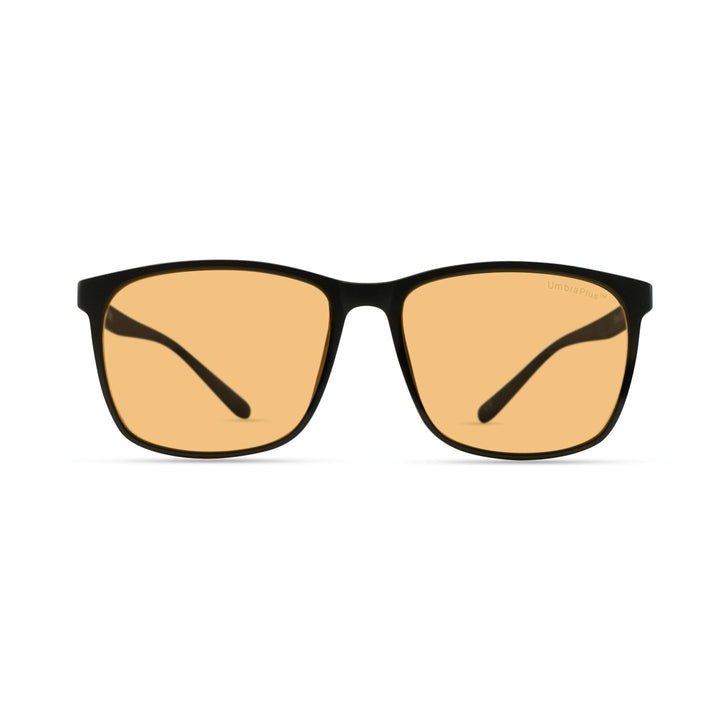
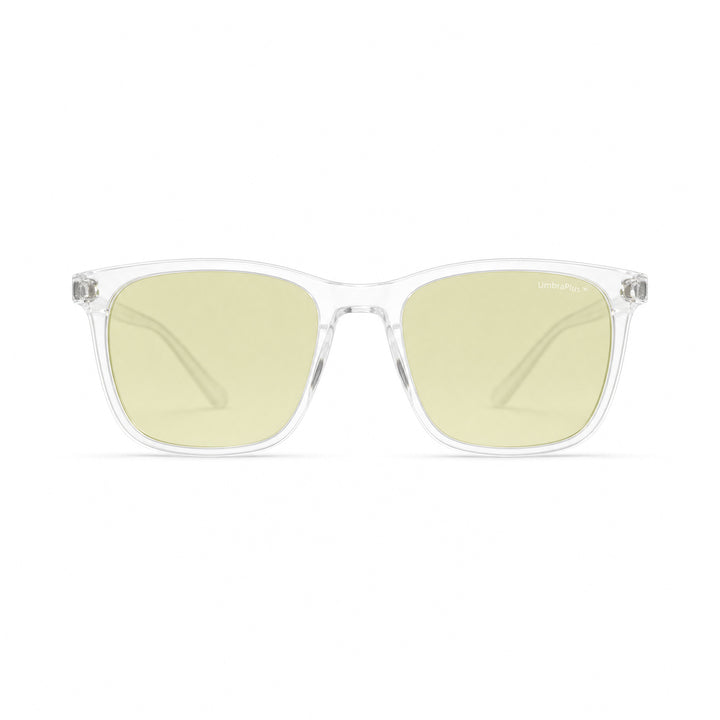
UmbraPlus™ glasses with Dark Orange lenses in a matte black frameUmbraPlus™ glasses with Light Yellow lenses and a crystal clear frame

UmbraPlus™ tinted glasses

Filter blue light before it reaches your eyes, while Visor™ builds the filter inside. Both tints block 100% of UV.

Dark Orange · blocks 97% of high-energy blue · evenings, bright sun

See the UmbraPlus™ page

Choose your Visor™ plan at the top of the page ↑

Questions before you add Visor™

Should I take Visor™ if I already take Clearer®?

If your days are screen-heavy, yes. Visor™ adds vitamin E, B2 and beta-carotene, which Clearer® doesn't contain, and together you get about 22 mg lutein a day, well within international safety assessments.

Do eye drops do the same job?

Not on their own. Lubricating drops soothe dryness for a while, but they don't address oxidative stress in your eye's surface cells. Visor™ works from within: vitamins C and E help protect those cells from oxidative stress, and A and B2 help maintain the membrane. Keep using drops if they help.

Aren't screen breaks enough?

Not on their own: breaks rest your focussing muscle, but they don't pause your photoreceptors, which never fully switch off and aren't replaced once they're lost.

When will I notice a difference?

In trials, lutein improved contrast in daily computer users within 12 weeks, and six months of lutein and zeaxanthin improved tear production and stability in people on screens all day.†

Do blue-light glasses do the same job?

No, they work at a different point: glasses filter light before it enters your eye, and Visor™ builds the pigment that filters it inside. For both, add UmbraPlus™: Dark Orange lenses block 97% of high-energy blue light (380–445 nm).

Who shouldn't take Visor™?

Visor™ contains beta-carotene. The NHS advises people who smoke, or who have been exposed to asbestos, not to take beta-carotene supplements, so Visor™ isn't suitable if either applies. If you're pregnant, breastfeeding, taking medication or under medical supervision, check with your doctor or pharmacist first.

Is it a subscription, and what if it isn't for me?

Only if you choose one: buy one bottle or six months as one-off orders, or subscribe for 15% off. If Visor™ isn't for you, we'll refund your order in full within 180 days.

A bottle of Visor™ and a glass of water on a white window ledge, a laptop at the edge

The cells you see with today
are the ones you'll have at 80

Every day they work, they make reactive oxygen, and the damage that slips past your defences stays. Give them daily antioxidant defence, for every decade ahead.

Visor™